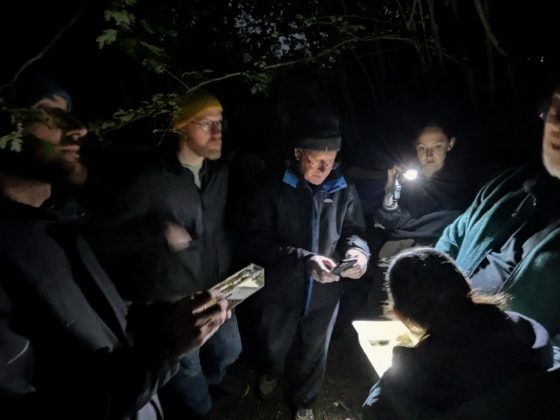
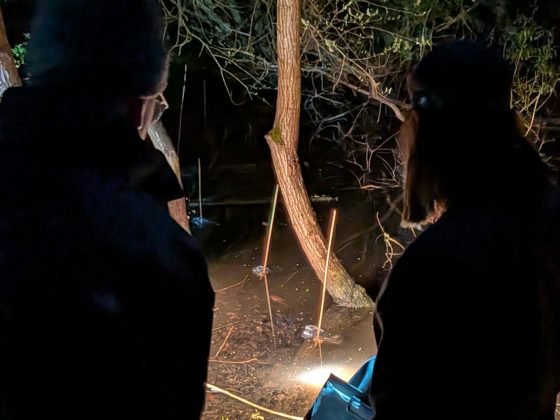
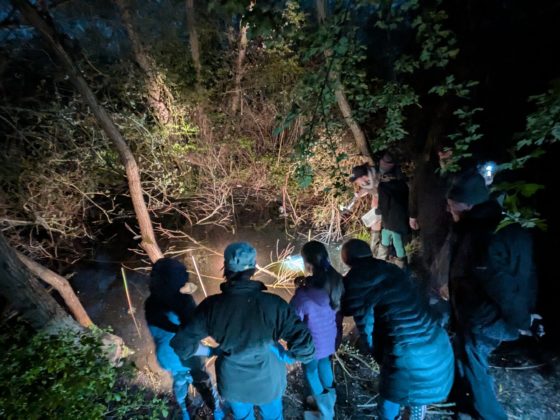
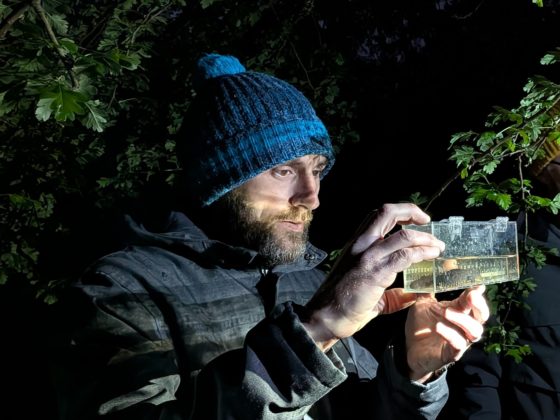
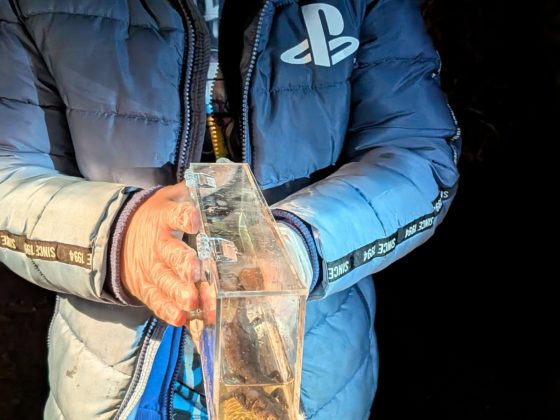
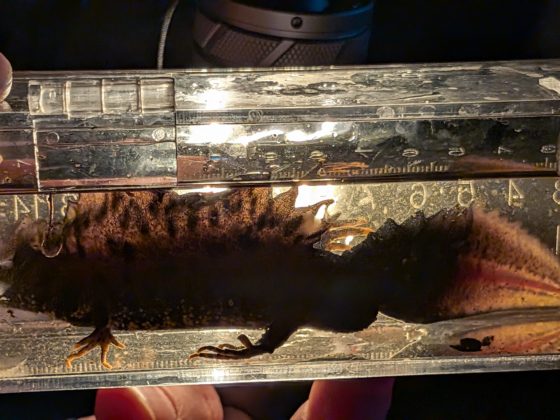
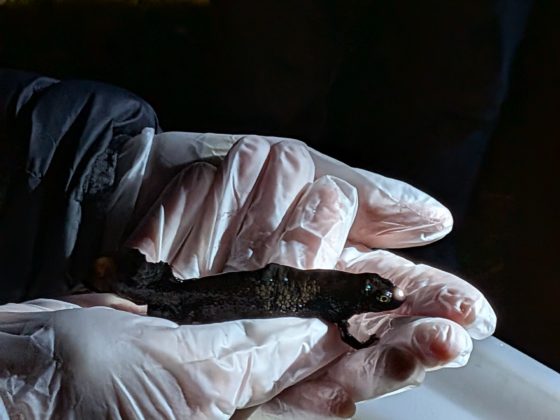
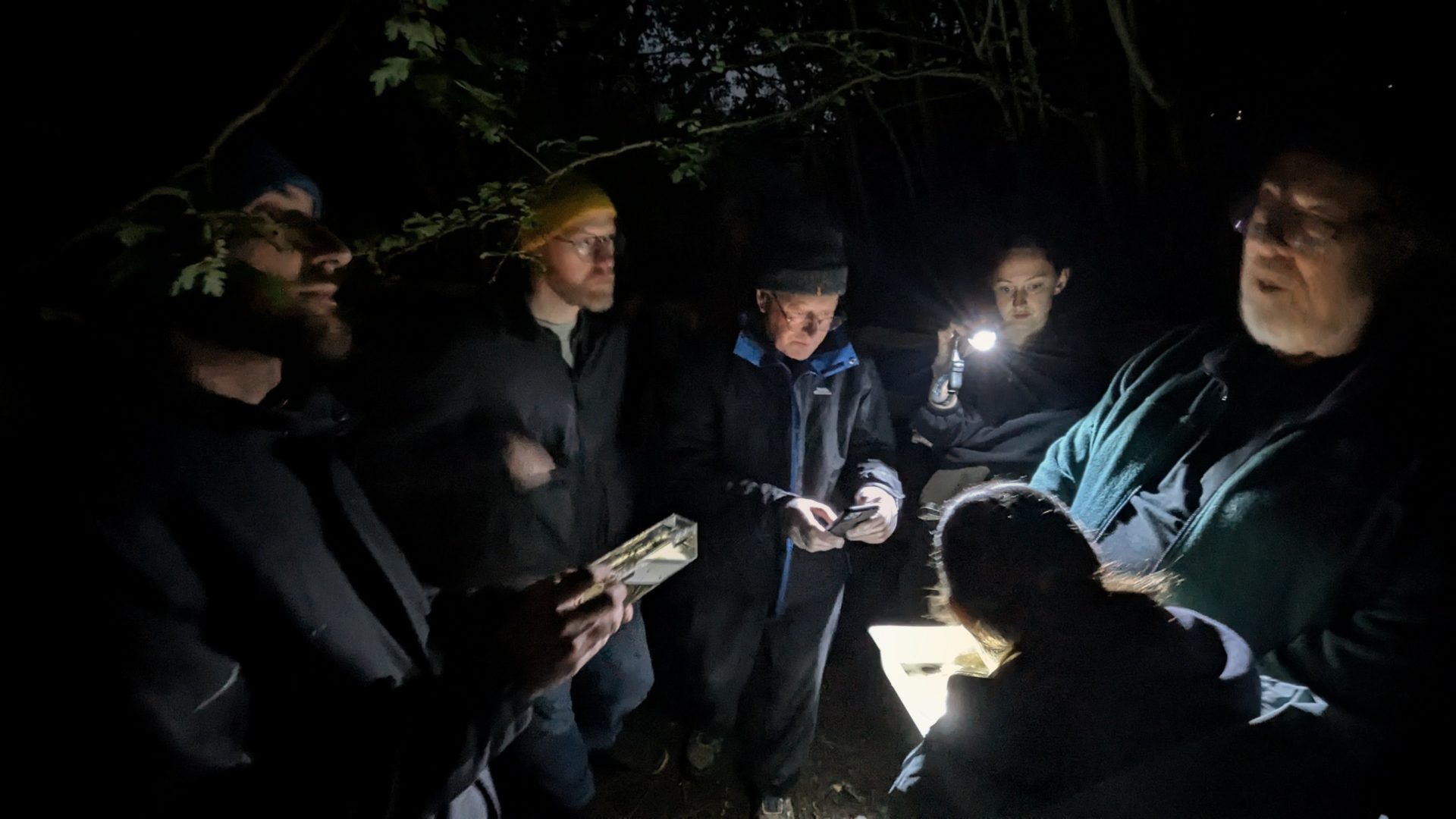
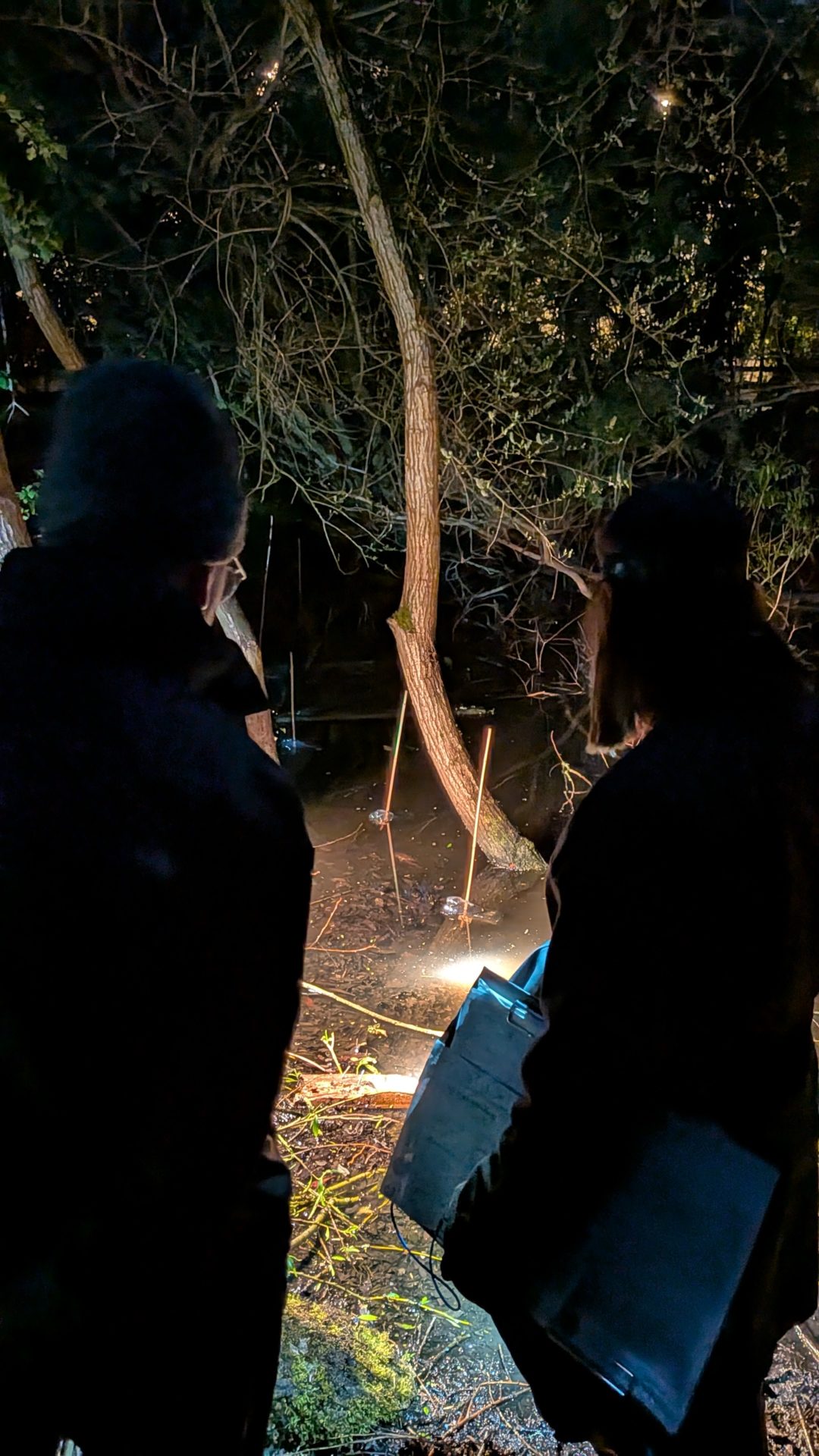
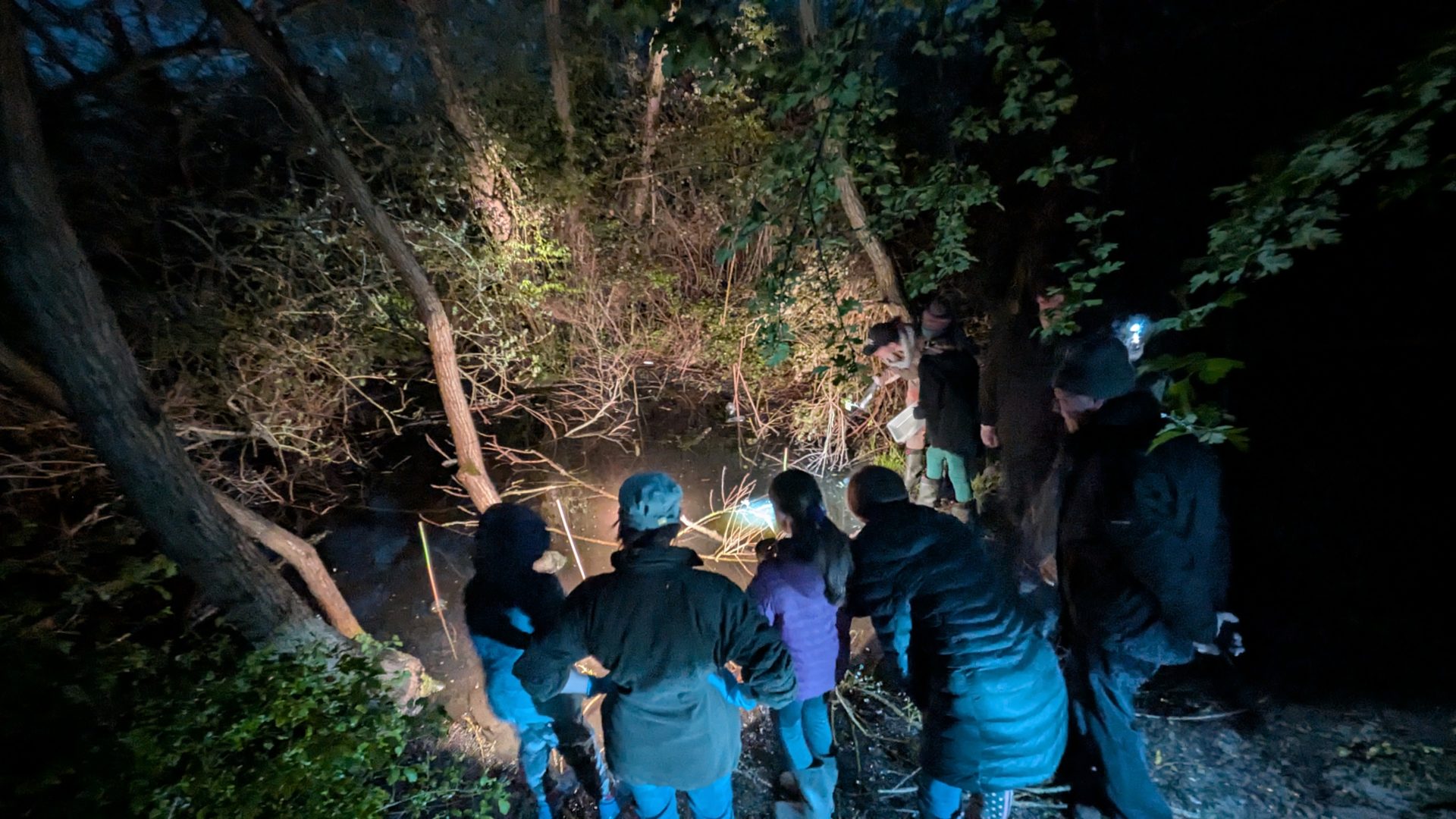
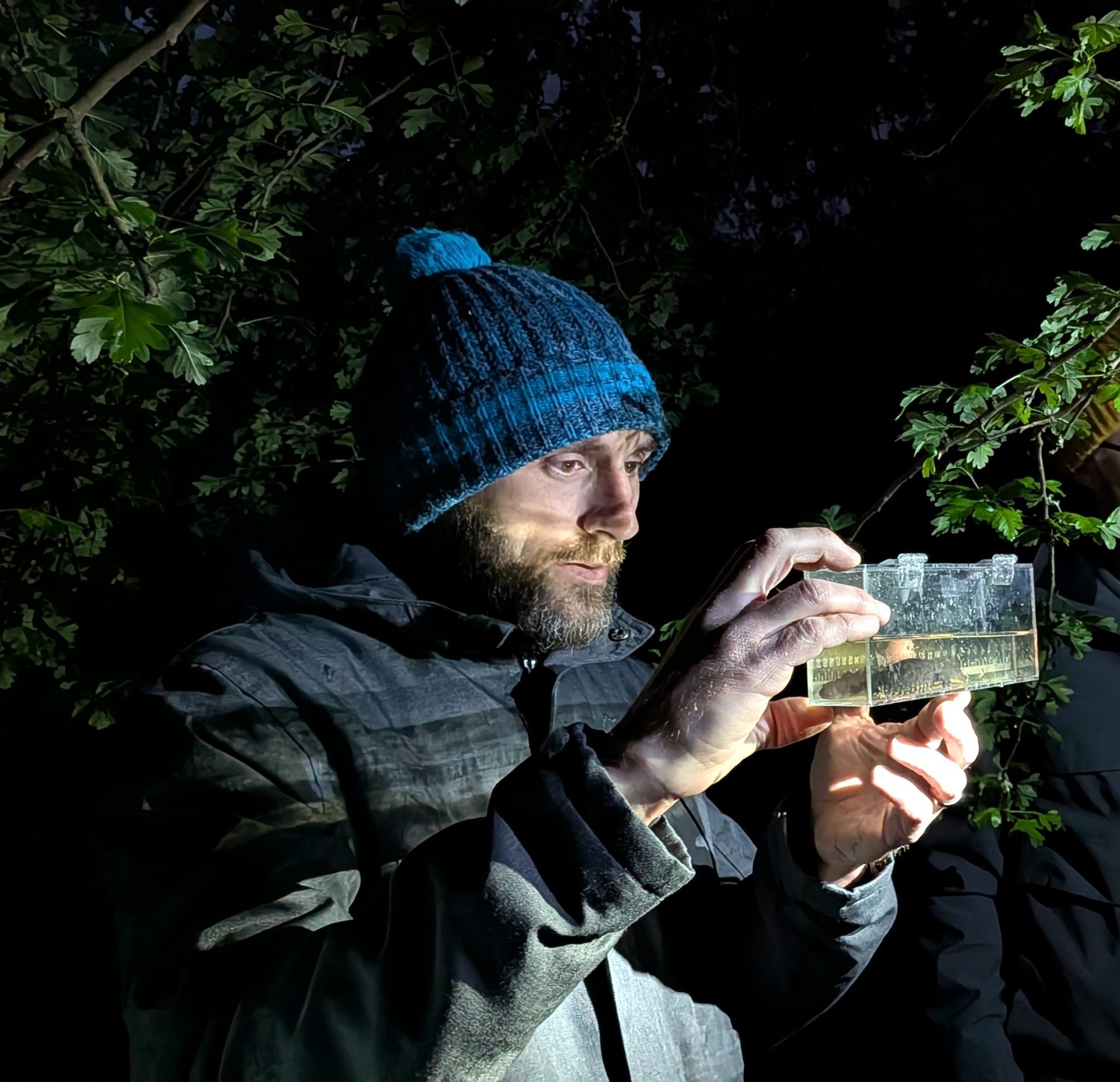
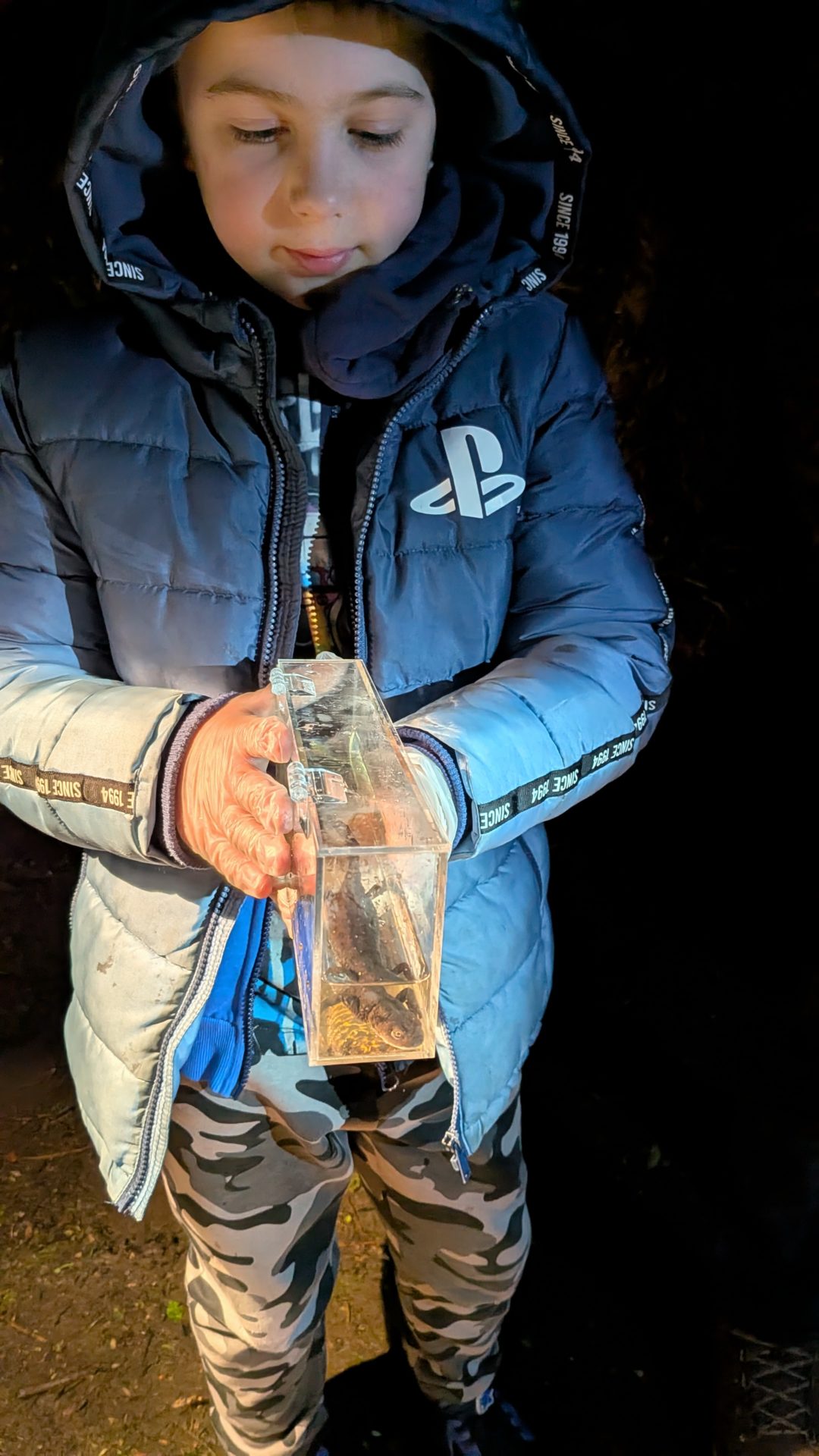
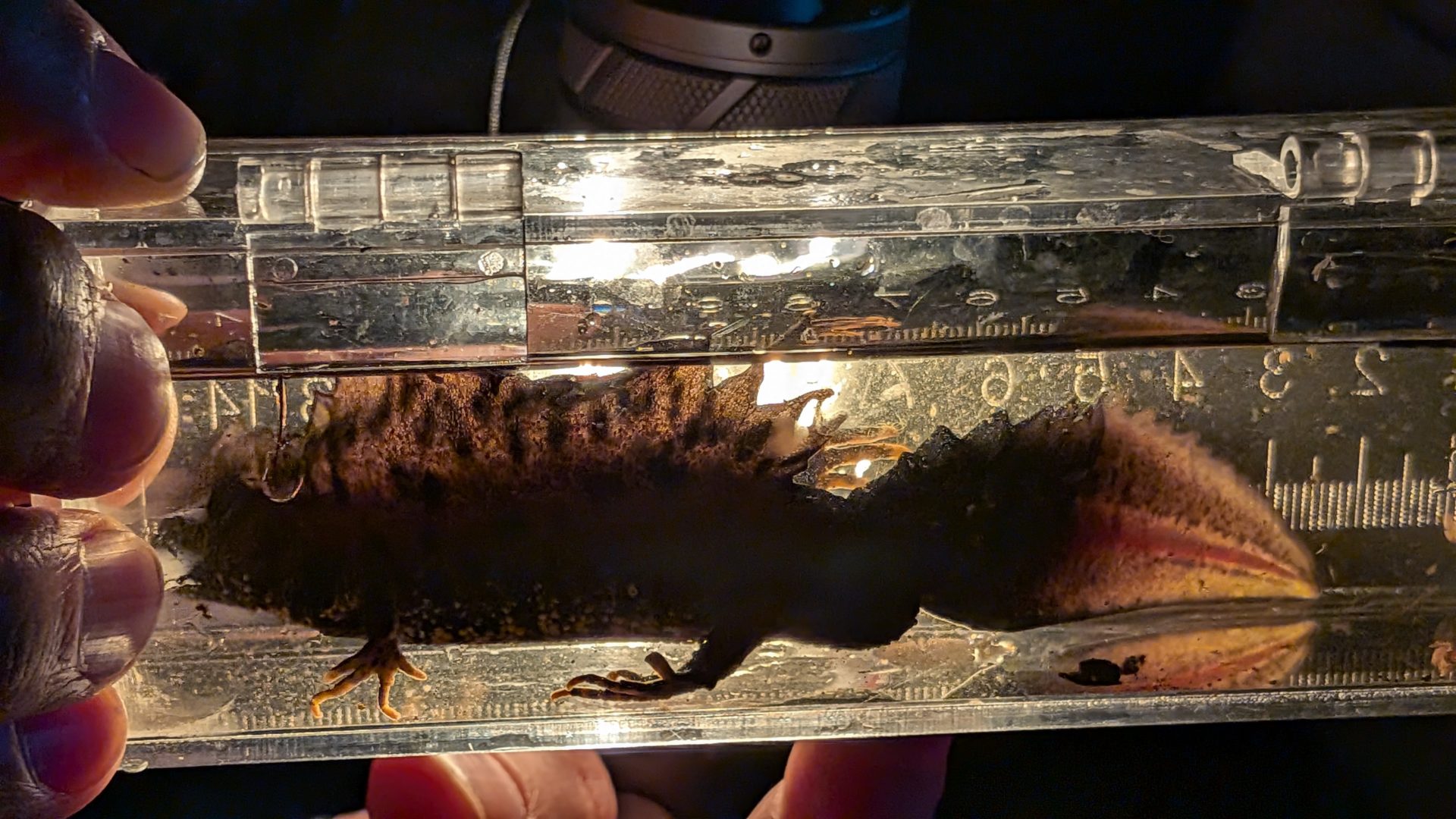
Working with Wiltshire Wildlife Trust, the Great Crested Newt walk took place recently at Torun Way near Grace Walk, one of several newt pond sites within the parish. The Torun Way pond is a natural pond, while some of the other ponds in the area are man-made, created as part of a conservation strategy linked to the development of the area around 25 years ago.
These ponds are connected by green corridors, allowing newts to move safely between habitats. To reduce the risk of newts entering roads, special features called Newt Grieve Slabs have been installed. These guide newts toward safe tunnel crossings and prevent them from straying into hazardous areas. Some road slats visible on site are part of this protective system.
Although associated with ponds, Great Crested Newts do not live permanently in water; they return only to breed. During this time, females lay distinctive yellow eggs on aquatic plants, carefully folding leaves around them for protection. The surrounding terrestrial habitat is therefore just as important as the ponds themselves.
The ponds are currently being supported by funding from Wiltshire Wildlife Trust, which aims to improve habitat conditions by selectively removing vegetation. This allows more daylight into the ponds, which is essential for supporting a healthy breeding environment. Swindon is notable for having the UK’s only Great Crested Newt “reservoir,” highlighting the importance of conservation efforts in the area.
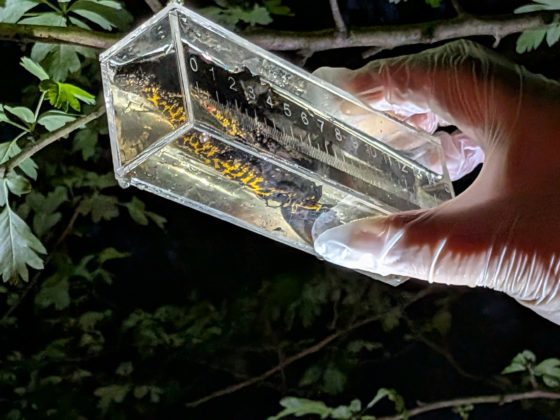
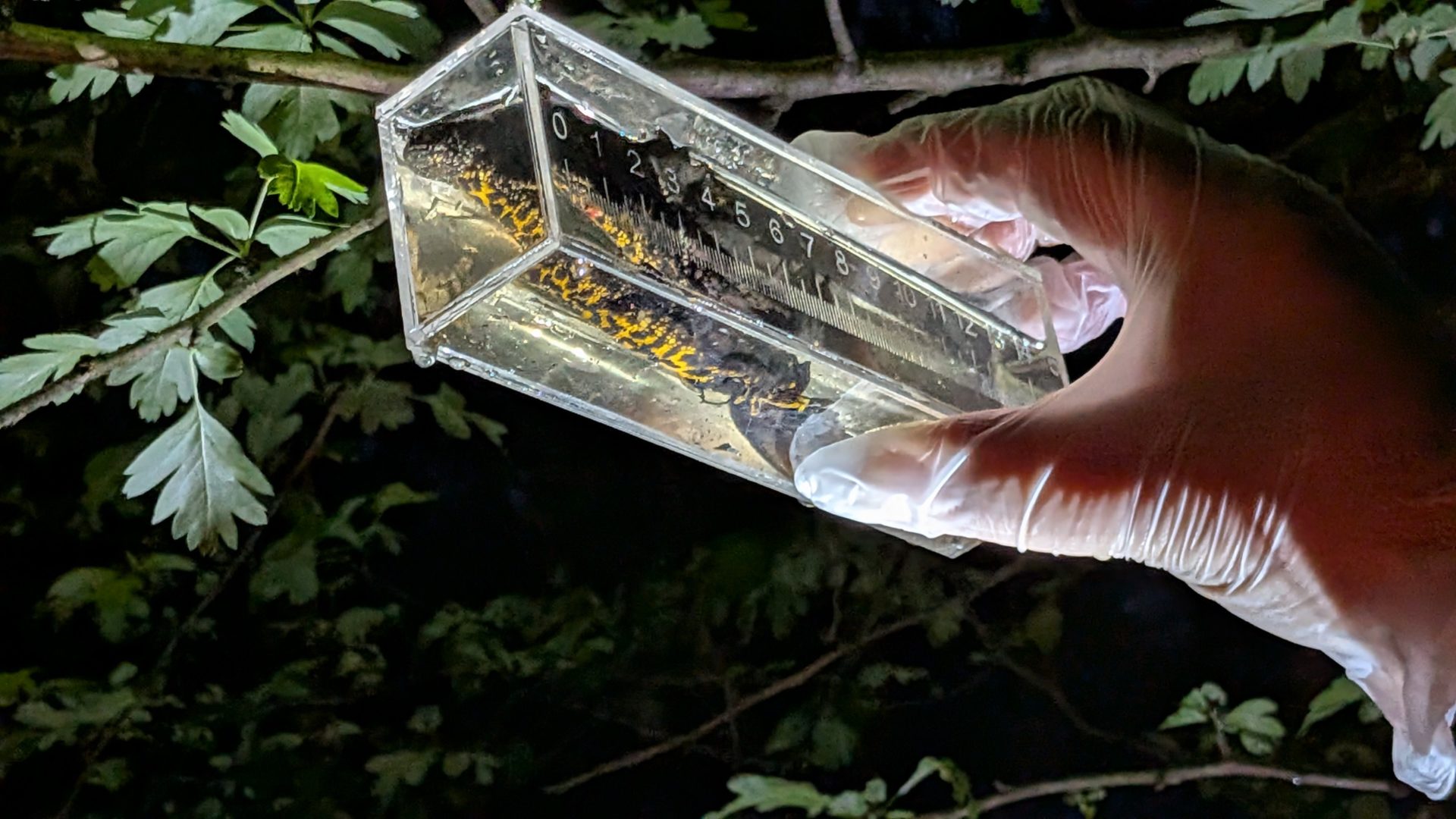
Monitoring of the newt population is carried out using bottle traps placed in ponds overnight. These traps allow conservationists to safely count newts and assess population health. For example, 41 newts were recorded in the Torun Way pond on the previous night. Surveys are typically conducted between March and mid-June, with fewer traps used during warmer periods. A population of over 100 newts is considered strong.
The walk was led by Neil Pullen, supported by seven enthusiastic volunteers who are currently under Neil’s licence, to get their own licences to handle this protected species. All handling is strictly controlled under licence, and members of the public are advised never to handle newts.
The data collected helps inform future conservation strategies, including identifying suitable breeding locations and assessing the success of existing ponds. Torchlight surveys are also used to observe newt activity directly.
There has not been a formal management plan in place for the past 20 years, meaning efforts are now focused on restoring and improving the site. Future ideas include creating informative signage to raise awareness, explaining features such as the grieve slabs, and running more community events. Wiltshire Wildlife Trust is also keen to collaborate with the parish to improve long-term maintenance and protection of these important habitats.